← back to Noisy documents
ICADL 2024 · 2024 · Noisy documents
Investigating OCR-Sensitive Neurons to Improve Entity Recognition in Historical Documents
This paper asks a very specific question: are some neurons inside large language models unusually sensitive to OCR noise, and can controlling them improve named entity recognition on historical documents? We look inside Llama2 and Mistral, compare how their layers react to clean and OCR-corrupted text, identify OCR-sensitive neurons, and test whether neutralising them makes NER more robust.
Research question
OCR noise is usually treated as something to clean before modelling. This paper asks a more internal question: where does OCR damage appear inside the model itself?
We test whether specific layers and neurons in Llama2 and Mistral react strongly to corrupted tokens, and whether reducing the influence of those neurons improves named entity recognition on historical documents.
Main result
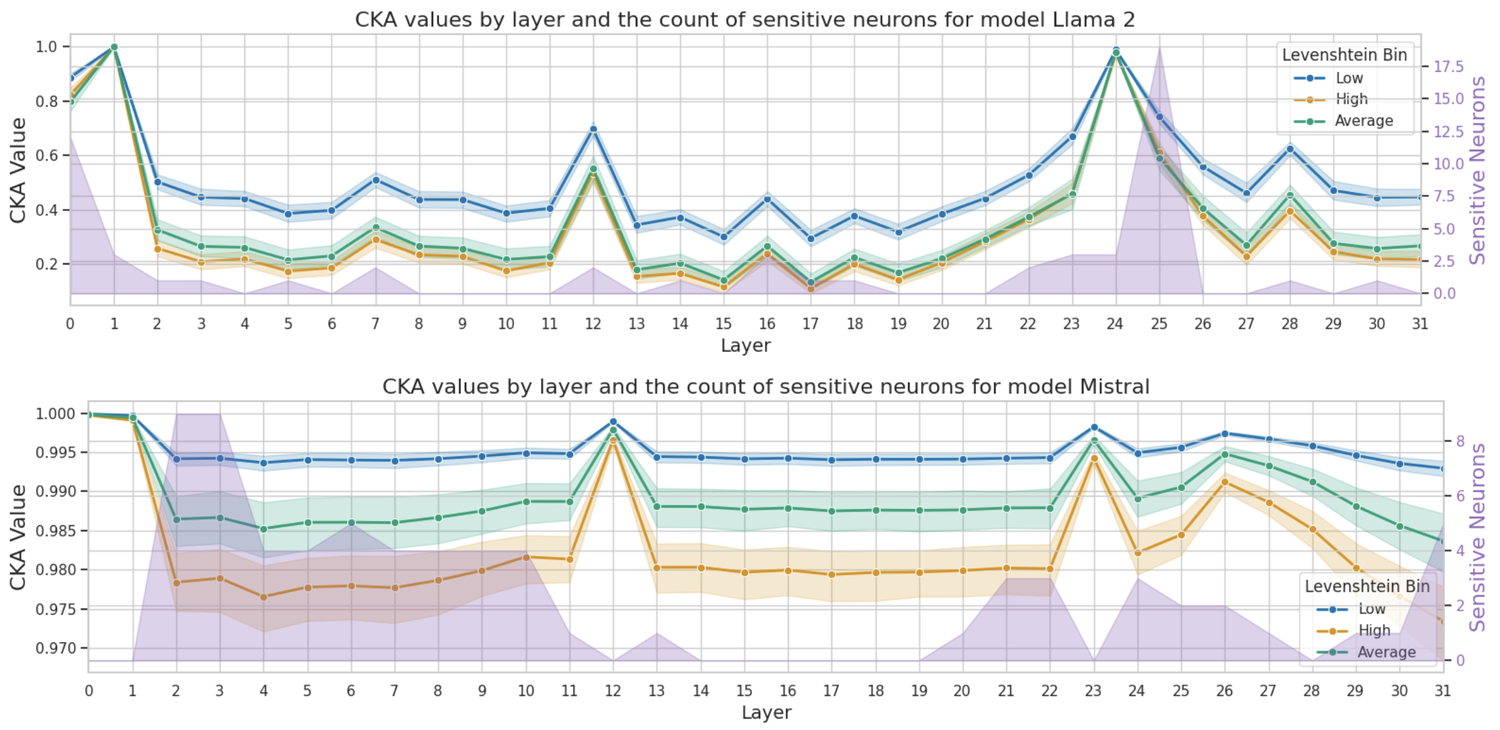
OCR noise leaves measurable traces inside the models. Some MLP regions behave differently for clean and noisy inputs, and selected neurons consistently react to OCR-like distortions.
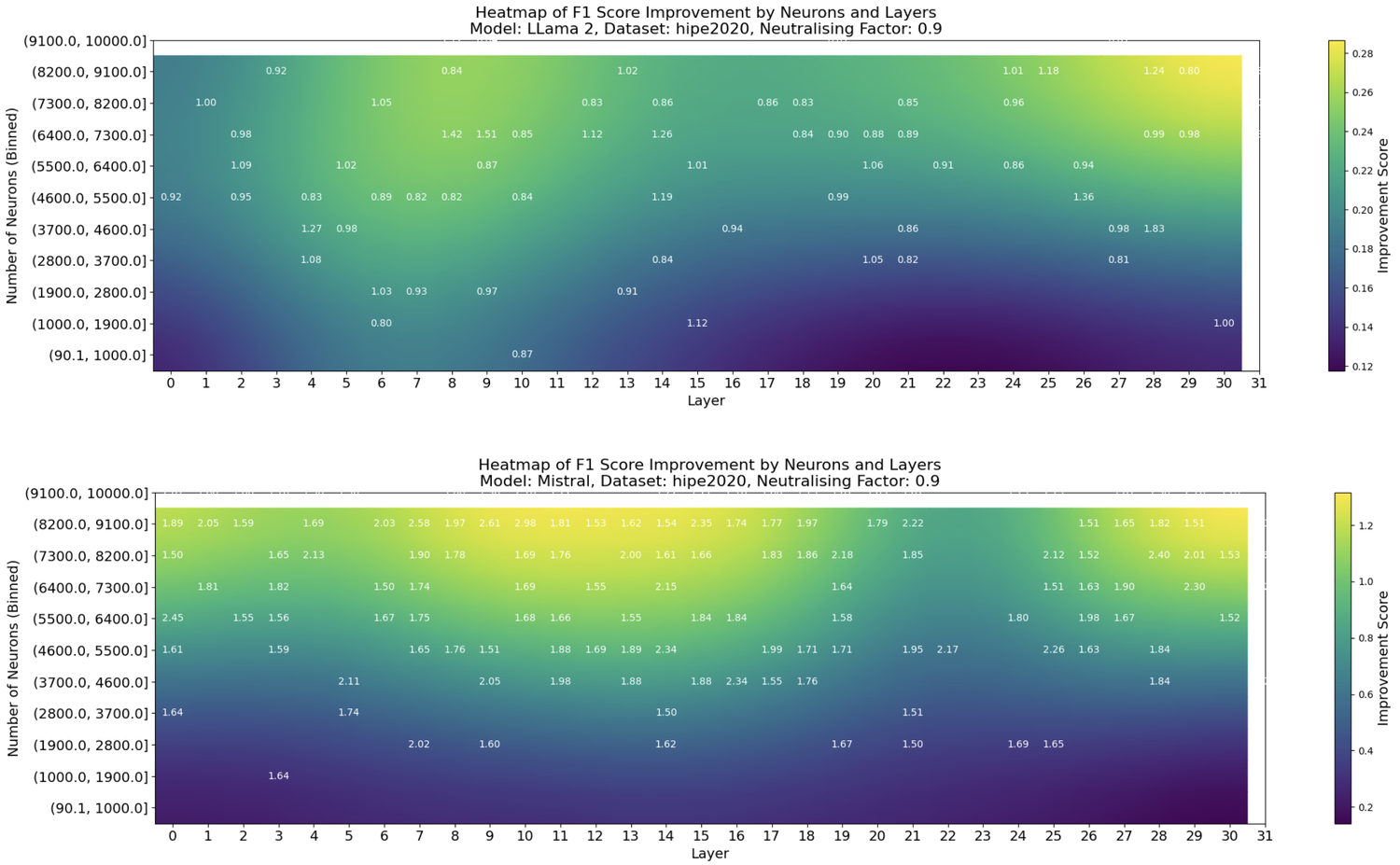
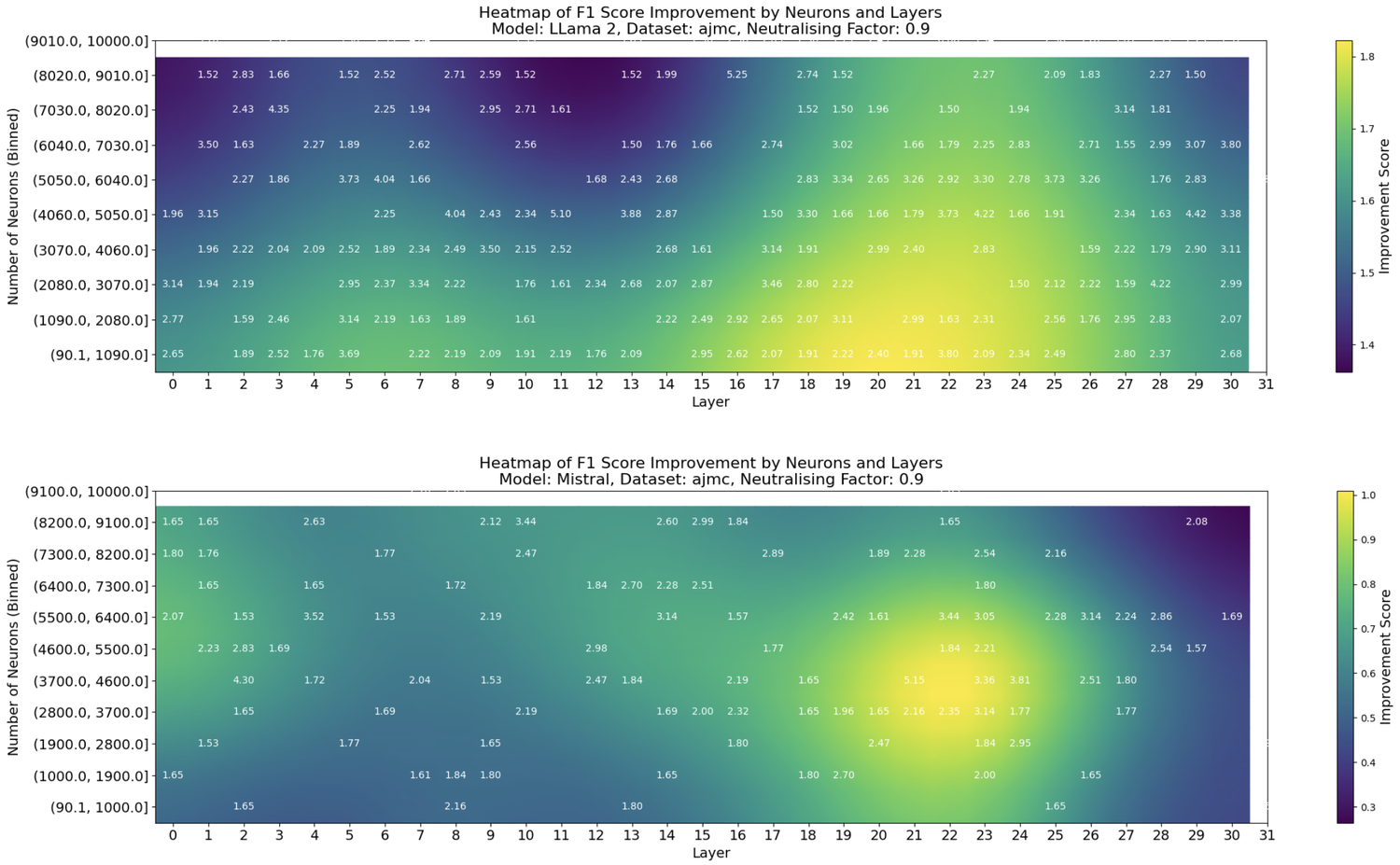
Neutralising OCR-sensitive neurons can improve NER performance. The strongest gains appear in specific middle and late layers, depending on the dataset and model.
Method / experiment
The study creates clean/noisy token pairs from corrected French historical newspaper text, then introduces synthetic OCR-like character errors at low, average, and high noise levels.
Those token pairs are passed through Llama2 and Mistral. We compare layer activations with CKA similarity, identify OCR-sensitive neurons from activation differences, and test neuron neutralisation during NER inference.
Why it matters
This is a way of studying OCR robustness from inside the model, not only from the input side. Instead of only asking whether noise hurts, the paper asks where the damage travels.
For historical NLP, that matters because archives rarely arrive clean. Robust extraction needs models that can handle damaged text without quietly turning small character errors into semantic errors.
Reuse / links
Useful for work on OCR robustness, neuron analysis, historical NER, model interpretability, and controlled noise experiments.
One-line takeaway
OCR errors are not just ugly characters at the input: they activate identifiable regions inside the model, and carefully reducing their influence can make historical NER less fragile.